
July 1, 2026


In today’s software-driven business environment, development teams need more than just a place to store code. They need a platform that helps developers collaborate, manage projects, automate workflows, and build software securely. GitHub is one of the most widely used platforms for modern software development, providing a collaborative environment where teams can manage source code and accelerate the development lifecycle. For businesses, GitHub can become an important part of establishing a more structured, productive, and secure software development process.
GitHub is a cloud-based development platform built around Git, a distributed version control system. It enables developers to store, manage, track, and collaborate on software code through repositories. Teams can use GitHub to maintain different versions of their code, review changes, manage development tasks, and collaborate across multiple teams and locations.
GitHub is commonly associated with software development, but its capabilities extend beyond code storage. Organizations can use GitHub to manage documentation, automate development workflows, implement security practices, and establish standardized development processes. This makes GitHub relevant not only to developers but also to engineering managers, IT teams, security teams, and technology leaders.
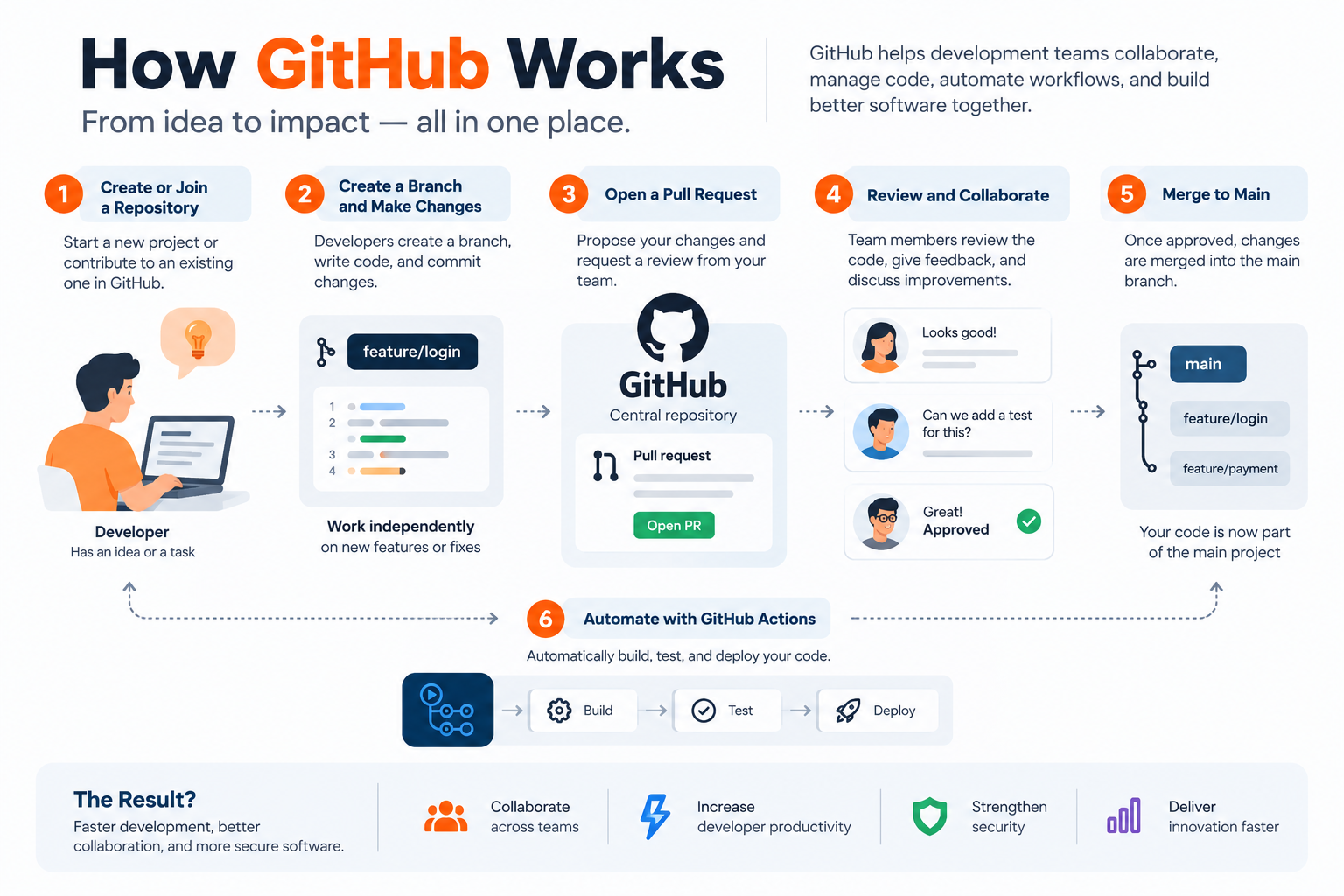
GitHub works together with Git to help teams manage changes to their code. Developers can create a repository that serves as a centralized location for a project's source code and related files. Developers then use Git to create branches, make changes, and commit those changes while maintaining a history of the project.
When developers are ready to integrate their work, they can create a pull request. Other members of the team can review the proposed changes, provide feedback, and approve the code before it is merged into the main branch. This workflow allows organizations to establish a more controlled development process while reducing the risk of unwanted changes entering production.
GitHub also provides tools for managing issues, projects, releases, and automated workflows. Through GitHub Actions, organizations can automate tasks such as testing, building applications, and deploying software.
For businesses, GitHub can provide value across several areas of the software development lifecycle.
1. Centralized collaboration
GitHub gives development teams a shared environment for managing code and collaborating on projects. Teams can work across locations while maintaining visibility into changes and development activities.
2. Version control
GitHub's integration with Git allows teams to maintain a history of code changes. Developers can identify who made changes, review previous versions, and restore earlier versions when necessary.
3. Code review
Pull requests provide a structured process for reviewing code before it is merged. This can help organizations improve code quality and establish development standards across teams.
4. Automation
GitHub Actions allows teams to automate development workflows. Organizations can create automated processes for testing, building, deploying, and maintaining applications, helping reduce repetitive manual work.
5. Security
GitHub provides security capabilities that can help organizations identify vulnerabilities, manage dependencies, and protect their development environment. These capabilities become increasingly important as businesses manage larger software teams and more complex applications.
6. Developer productivity
By bringing source code, collaboration, project management, automation, and security capabilities into one platform, GitHub can help development teams reduce friction throughout the software development lifecycle.
As organizations scale, managing software development across multiple teams introduces additional requirements. Enterprises often need stronger governance, centralized administration, security controls, and support for larger development environments.
GitHub offers enterprise-focused capabilities designed to address these requirements. Organizations can establish policies, manage access, control repositories, and provide development teams with a standardized environment.
For technology leaders, the value of GitHub is therefore not simply having a place to store source code. It is about creating an environment where developers can collaborate efficiently while the organization maintains appropriate levels of governance, security, and control.
GitHub can be valuable for organizations with internal development teams, software engineering departments, technology projects, or digital transformation initiatives. It can support startups building their first products, growing companies managing multiple development teams, and enterprises operating complex software environments.
GitHub can also become particularly valuable when organizations are adopting DevOps, cloud-native development, artificial intelligence, or other modern software engineering practices. These environments typically require faster collaboration, automation, continuous integration, continuous delivery, and stronger security throughout the development lifecycle.
GitHub offers different plans and capabilities designed to accommodate different organizational requirements. The appropriate license depends on factors such as the organization's team size, security requirements, collaboration model, governance needs, and development workflow.
For businesses, selecting a license should therefore go beyond simply comparing features. Organizations should evaluate which capabilities are relevant to their development environment and how GitHub can fit into their existing technology strategy.
Choosing and implementing the right GitHub solution can help your development team establish a more collaborative, automated, and secure software development environment.
Nawatech can help your organization explore the right GitHub licensing option based on your business and technical requirements. Whether you are starting to adopt GitHub or looking to scale its usage across your organization, our team can help you identify the appropriate solution.
Ready to empower your development team with GitHub?
Contact Nawatech to discuss your GitHub licensing requirements and find the right solution for your organization.